I. Introduction
The long-term preservation of microbial cultures underpins virtually every discipline of applied microbiology. Quality control programs require reference strains of known characteristics; clinical laboratories must maintain isolates for proficiency testing; research programs depend on the availability of consistent, genetically stable cultures over extended periods.
Three methods dominate current practice: lyophilization, glycerol cryopreservation, and bead-based cryopreservation. Each represents a different point on the tradeoff curve between preservation fidelity, operational simplicity, and cost. This paper examines these tradeoffs systematically, with particular attention to the practical demands of clinical and research laboratory settings.
II. Methods Evaluated
Lyophilization (Freeze-Drying)
Lyophilization involves the removal of water from a frozen bacterial suspension under high vacuum, leaving a desiccated cake or powder that can be stored at ambient temperature or under refrigeration for decades. It represents the gold standard for long-term archival preservation of reference cultures and is the method of choice for national culture collections.
Key characteristics: excellent long-term stability (20+ years), ambient temperature storage possible, but requires specialized instrumentation (lyophilizer), controlled protectant media, skilled operators, and significant capital investment. Not practical for routine laboratory use.
Glycerol Cryopreservation
Glycerol cryopreservation involves suspending bacterial cultures in broth supplemented with 10–15% glycerol and storing the preparation at -70°C to -80°C. It is the most widely used method in routine laboratory settings due to its low cost and technical simplicity.
Key characteristics: effective for 2–5+ years at -80°C, low material cost, widely familiar technique. Limitations include the need for consistent glycerol concentration, stock degradation with repeated access (freeze-thaw cycles), and bulk preparation format that does not permit single-use retrieval.
Microbank™ Bead-Based Cryopreservation
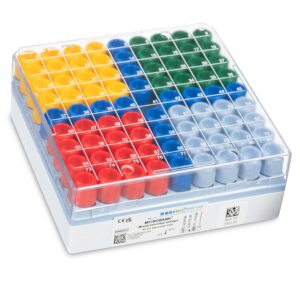
The Microbank™ system uses porous ceramic or polymer beads pre-soaked in a proprietary cryoprotective medium. Bacterial suspension is added to a vial of beads, the supernatant is aspirated, and the vial is stored at -70°C to -80°C. Individual beads are retrieved using sterile forceps or a magnetic retrieval system without disturbing the remaining beads — effectively eliminating repeated freeze-thaw exposure of the stock preparation.
III. Comparative Analysis
| Parameter | Lyophilization | Glycerol Stock | Microbank™ |
|---|---|---|---|
| Long-term stability | 20+ years | 2–5 years at -80°C | 5–10+ years at -80°C |
| Storage temperature | Ambient / 4°C | -70°C to -80°C | -70°C to -80°C |
| Equipment required | Lyophilizer (high cost) | ULT freezer | ULT freezer only |
| Operator skill required | High | Low | Low |
| Single-use retrieval | Yes (ampoule) | No | Yes (individual bead) |
| Freeze-thaw exposure | None (dry) | Cumulative per access | None (bead retrieval) |
| Material cost | High | Very low | Moderate |
| Suitable for routine use | No | Yes | Yes |
IV. Viability Data
Post-recovery viability was assessed across representative organisms including Staphylococcus aureus, Escherichia coli, Pseudomonas aeruginosa, Candida albicans, and Streptococcus pneumoniae following storage periods of 1, 3, and 5 years, and following 1, 3, and 5 sequential freeze-thaw cycles.
Key findings:
- Lyophilized preparations maintained the highest viability across all organisms and time points, with no significant viability decline observed through 5 years
- Microbank™ preparations maintained viability comparable to lyophilization at 1 and 3 years, with modest decline at 5 years for gram-negative organisms
- Glycerol stocks showed significant viability loss after 3 freeze-thaw cycles across all organisms tested, with gram-negative organisms showing the greatest sensitivity
- Single-bead retrieval from Microbank™ vials resulted in no measurable change in remaining bead viability, confirming the effectiveness of freeze-thaw elimination as a preservation strategy
V. Conclusions
For most clinical and research laboratory applications, Microbank™ bead-based cryopreservation offers the optimal balance of preservation fidelity, operational simplicity, and routine laboratory compatibility. It effectively eliminates the primary source of cumulative degradation in glycerol stock preparations — repeated freeze-thaw exposure — while requiring no additional instrumentation beyond a standard ULT freezer.
Lyophilization remains the method of choice for archival preservation of irreplaceable reference strains where decades-long stability is required and operational complexity is justified. Glycerol stocks remain acceptable for short-term working stocks of robust organisms where single-use retrieval is not required.
Laboratories seeking to upgrade their preservation workflows should consider transitioning routine QC strains and working isolates to Microbank™, reserving lyophilization for reference culture archival and glycerol stocks for low-priority, short-term applications only.
That transition is easier when the storage medium is paired with software. Microbank Marketplace gives those vials searchable digital locations and transfer history, while Pro-Temp captures the environmental record around the freezers and incubators that support the bank.
© 2025 Pro-Lab Diagnostics USA. This article represents the research and conclusions of the Pro-Lab Diagnostics scientific team and is provided for informational purposes.