The long-term preservation of bacterial cultures is critical to microbiological workflows in clinical, academic, and industrial laboratories. Two common methods employed for cryogenic storage are glycerol cryopreservation and bead-based systems such as Microbank®. However, a frequently overlooked variable in preservation quality is the cumulative damage introduced by repeated freeze-thaw cycles — a common occurrence when stock cultures are accessed multiple times over months or years.
Mechanisms of Freeze-Thaw Damage
Ice crystal formation is the primary mechanism of cellular injury during freeze-thaw cycles. As a bacterial suspension freezes, extracellular ice forms first, increasing the osmotic concentration of the remaining liquid phase. Water then moves out of cells osmotically, causing dehydration-related injury. On thawing, rapid rehydration can cause osmotic lysis.
Repeated cycling compounds this damage through several mechanisms:
- Cumulative membrane damage — repeated ice crystal penetration degrades cell membrane integrity progressively
- Protein denaturation — freeze-thaw stress unfolds and aggregates intracellular proteins
- DNA fragmentation — mechanical shear forces from ice crystals can cause double-strand DNA breaks
- Metabolic dysregulation — sub-lethal injury may alter gene expression patterns in surviving cells
Organism-Specific Considerations
Not all bacteria are equally susceptible to freeze-thaw damage. Key variables include:
Gram-Positive vs. Gram-Negative Organisms
Gram-positive bacteria generally demonstrate greater freeze-thaw tolerance than gram-negative species. The thick peptidoglycan layer of gram-positive organisms provides structural support during osmotic stress cycles. Gram-negative organisms, with their thinner peptidoglycan and outer membrane complexity, tend to show higher viability loss per freeze-thaw cycle.
Spore-Forming Organisms
Spore-forming organisms such as Bacillus and Clostridium species are highly resistant to freeze-thaw stress. Endospores can survive multiple cycles with minimal viability impact, making repeated access of spore-former stocks less concerning than for vegetative cell cultures.
Fastidious Organisms
Fastidious organisms — including Neisseria gonorrhoeae, Haemophilus influenzae, and anaerobes — are particularly vulnerable. Even a single inadvertent freeze-thaw cycle can result in complete culture loss if protective media are not used. These organisms require careful protocol design and single-use aliquot strategies.
The Role of Cryoprotective Agents
Cryoprotective agents (CPAs) reduce ice crystal formation and osmotic injury during freezing. Their efficacy across multiple freeze-thaw cycles varies considerably:
Glycerol
Glycerol (typically 10–15% v/v) is the most widely used CPA for bacterial stocks. It penetrates cell membranes and reduces intracellular ice formation. However, glycerol stocks require consistent concentration and are sensitive to repeated partial thawing — removing a portion of the stock for subculture each time introduces variability and can concentrate residual glycerol, altering CPA efficacy in subsequent cycles.
Microbank® Bead System
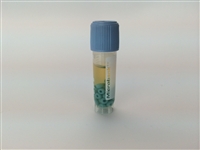
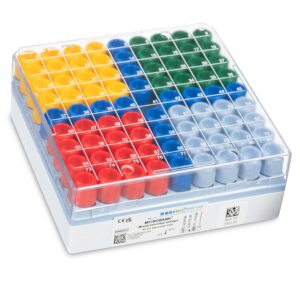
The Microbank® system addresses a key limitation of bulk glycerol stocks: the need to thaw and refreeze the entire preparation for each access. Individual beads are retrieved using sterile forceps or a magnetic wand without thawing the remaining beads. This eliminates repeated freeze-thaw exposure for the remaining stock, preserving viability across the shelf life of the preparation.
Key Advantage of Bead-Based Preservation
Because individual Microbank® beads are retrieved without disturbing the remainder of the vial, the bulk of the stock is never subjected to repeated freeze-thaw cycles. This fundamentally changes the preservation equation — each bead represents a single-use unit with equivalent viability to the original preparation.
Protocol Recommendations
Based on available evidence and laboratory best practices, we recommend the following for minimizing freeze-thaw damage:
- Prepare aliquots — divide stock cultures into single-use volumes to avoid repeated access of the master stock
- Use bead-based storage for routinely accessed strains — Microbank® beads allow individual retrieval without thawing the parent vial
- Slow freezing, rapid thawing — controlled-rate freezing reduces ice crystal size; rapid thawing at 37°C minimizes recrystallization injury
- Avoid partial thaws — if a glycerol stock must be used, thaw completely, remove the required volume, and refreeze immediately
- Monitor viability — subculture and CFU count at defined intervals to detect viability decline before a critical loss occurs
- Document freeze-thaw history — track the number of cycles each preparation has experienced using your inventory management system
Conclusion
Freeze-thaw survivability is not a fixed property of a bacterial species but a dynamic outcome influenced by organism physiology, cryoprotective media, and laboratory protocols. Understanding these variables and designing workflows that minimize unnecessary freeze-thaw exposure is essential for maintaining culture integrity over time. Bead-based preservation systems like Microbank® offer a practical, validated solution that removes repeated freeze-thaw exposure as a variable — protecting the quality of preserved cultures across their entire useful life.
For labs trying to operationalize those practices, the buying problem is not just the bead system itself. You also need searchable vial records in Microbank Marketplace, documented freezer telemetry in Pro-Temp, and lot/QC traceability in Pro-LIMS Inventory so the freeze-thaw history is visible during audits rather than trapped in handwritten notes.