Laboratory freezer storage is an essential component of scientific research, clinical diagnostics, and pharmaceutical applications. Proper storage and management of samples ensure the integrity and viability of biological materials — protecting years of research investment and enabling reproducible, reliable results.
Temperature Zones and Applications
Laboratory freezers operate across several temperature ranges, each suited to different sample types and storage durations:
- -20°C (Standard freezer) — suitable for short-to-medium term storage of enzymes, reagents, and certain nucleic acids. Not recommended for long-term microbial preservation.
- -70°C to -80°C (Ultra-low temperature / ULT) — the standard for long-term preservation of bacterial cultures, viral stocks, cell lines, and clinical isolates. Recommended for Microbank® cryopreservation systems.
- -150°C to -196°C (Liquid nitrogen / vapor phase) — for indefinite preservation of irreplaceable samples including stem cells, primary cell cultures, and reference strains.
Organization and Inventory Management
A well-organized freezer is critical for both operational efficiency and sample integrity. Repeated opening and searching for samples causes temperature fluctuations that can degrade sensitive biological materials over time.
Best Practices for Inventory
- Implement a digital inventory system — tools like the Microbank Marketplace® app provide organism-based tracking across multiple freezers and sites
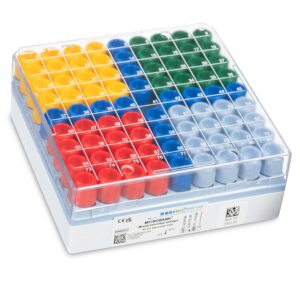
- Use color-coded boxes and racks to enable rapid visual identification
- Maintain a physical and digital manifest for each freezer, updated whenever samples are added or removed
- Assign freezer zones by sample type, project, or organism to minimize access time
- Never store samples without clear, durable labeling — cryogenic labels must be tested for adhesion at -80°C
Temperature Monitoring
Continuous temperature monitoring is non-negotiable for GLP/GCP-compliant laboratory environments. Temperature excursions — even brief ones — can irreversibly damage temperature-sensitive samples.
Pro-Temp® Monitoring Solution
Pro-Lab Diagnostics' Pro-Temp® monitoring app provides real-time temperature tracking with automated deviation alerts, battery backup logging, and offline data capture. Future versions will integrate blockchain audit trails for complete chain-of-custody documentation.
Monitoring Requirements
- Install continuous data loggers in every freezer — not just alarm systems
- Set alert thresholds at ±5°C from target temperature for ULT freezers
- Review temperature logs at minimum weekly; daily for critical samples
- Document all excursions with root cause analysis and corrective action
- Test alarm systems monthly
Preventing Freezer Failures
Freezer failure is a leading cause of catastrophic sample loss. Preventive maintenance significantly reduces this risk:
- Clean condenser coils every 3–6 months
- Defrost manually when ice buildup exceeds 1cm — ice acts as insulation and forces the compressor to work harder
- Ensure adequate ventilation space around the unit (minimum 3 inches on all sides)
- Never overfill — full freezers restrict airflow and increase compressor load
- Maintain a backup freezer or LN₂ contingency plan for critical samples
Cryopreservation Media Selection
The choice of cryoprotective agent (CPA) directly affects post-thaw viability. For microbial cultures:
- Glycerol (10–15% v/v) — most commonly used for bacterial stocks at -70°C to -80°C. Effective but requires accurate preparation and consistent concentration.
- DMSO — preferred for mammalian cell lines; toxic to some bacterial species at room temperature so rapid processing is essential.
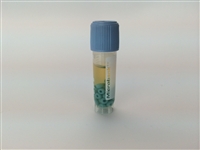
- Microbank® cryogenic beads — a standardized, validated alternative to glycerol stocks. Pre-measured, consistent CPA concentration, and bead-based retrieval eliminates the need to thaw the entire stock for subculture.
Regulatory Compliance
Laboratories operating under CLIA, CAP, ISO 15189, or GLP/GCP frameworks must document storage conditions as part of quality system requirements. Key documentation includes temperature logs, equipment maintenance records, calibration certificates for monitoring equipment, and sample disposition records.
In practice, most laboratories need three connected layers to keep freezer operations audit-ready: a monitoring layer such as Pro-Temp for continuous environmental records, a cryostorage layer such as Microbank Marketplace for vial-level traceability, and an operational inventory/QC layer such as Pro-LIMS Inventory for reagent, CAPA, and equipment documentation.
Conclusion
Proper laboratory freezer management is both a scientific and operational discipline. The investment in digital inventory systems, continuous monitoring, preventive maintenance, and validated cryopreservation media pays dividends in sample quality, regulatory compliance, and the protection of irreplaceable biological assets. Pro-Lab Diagnostics' Microbank® and Pro-Temp® platforms are designed to support laboratories at every stage of this process.