Regulated laboratories rarely fail audits because they lack data. They fail because inventory records, QC review, equipment calibration, and corrective actions live in separate spreadsheets, binders, and inboxes. The question is not whether a lab needs software. The question is whether the software reduces audit friction without creating a second documentation problem.
What labs actually need from inventory software
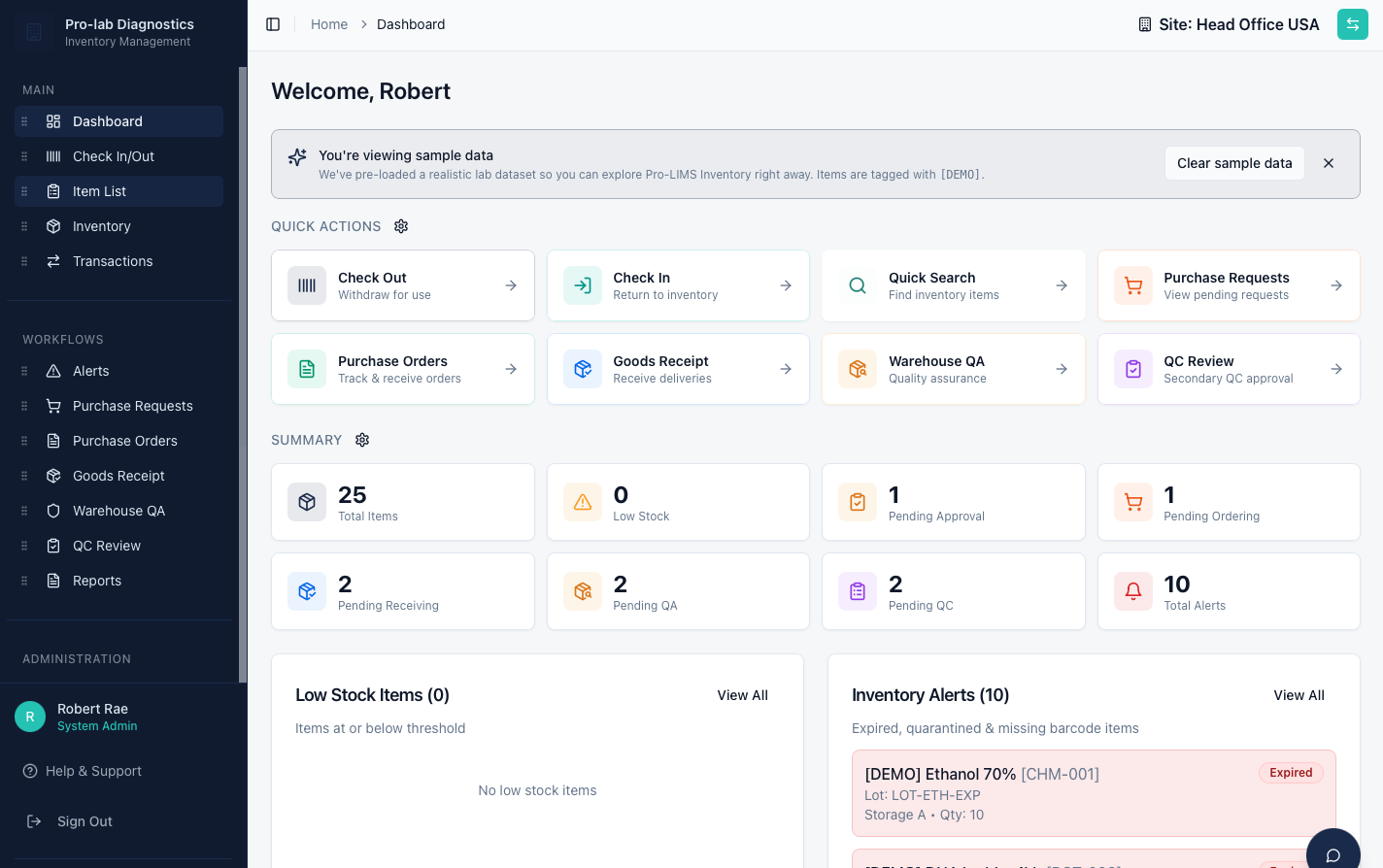
For CLIA, CAP, ISO 13485, and cGMP environments, inventory software has to do more than count boxes. It has to tie lot receipt, quarantine, release, usage, QC, and disposition together in one audit trail. That is why most labs evaluating Pro-LIMS Inventory are replacing a process stack, not a single spreadsheet.
- Lot-level traceability from receipt through depletion or disposal
- Dual QC checkpoints so warehouse intake and bench release are both documented
- Equipment, calibration, and maintenance records linked to daily operations
- CAPA and deviation workflows tied to the affected lot, instrument, or supplier
- Training and competency records for the staff touching controlled inventory
Spreadsheet failure points show up fast under audit
Spreadsheet systems usually break in predictable ways: expired reagent still in circulation, no clean chain from receiving to use, no evidence of review, and no easy answer when an auditor asks which open CAPA items affected a specific lot. The deeper issue is that spreadsheet workflows depend on human discipline for every handoff.
Where Pro-LIMS Inventory fits
Pro-LIMS Inventory is designed as the inventory, QC, CAPA, equipment, and training layer that sits next to an existing LIS. It does not try to replace patient-result workflows. It replaces the disconnected compliance stack around them.
Evaluation criteria procurement and QA teams should use
When a laboratory software committee is comparing options, the decision should be framed around risk and retrieval speed. If a supervisor cannot retrieve the full history of a reagent lot, instrument calibration, and related corrective action in a few clicks, the system is not reducing compliance risk.
- Can the system enforce release status before a lot is used?
- Can reviewers sign QC and deviations with re-authentication?
- Can the lab export an audit trail without manual cleanup?
- Can the system manage multiple sites without duplicating SOP overhead?
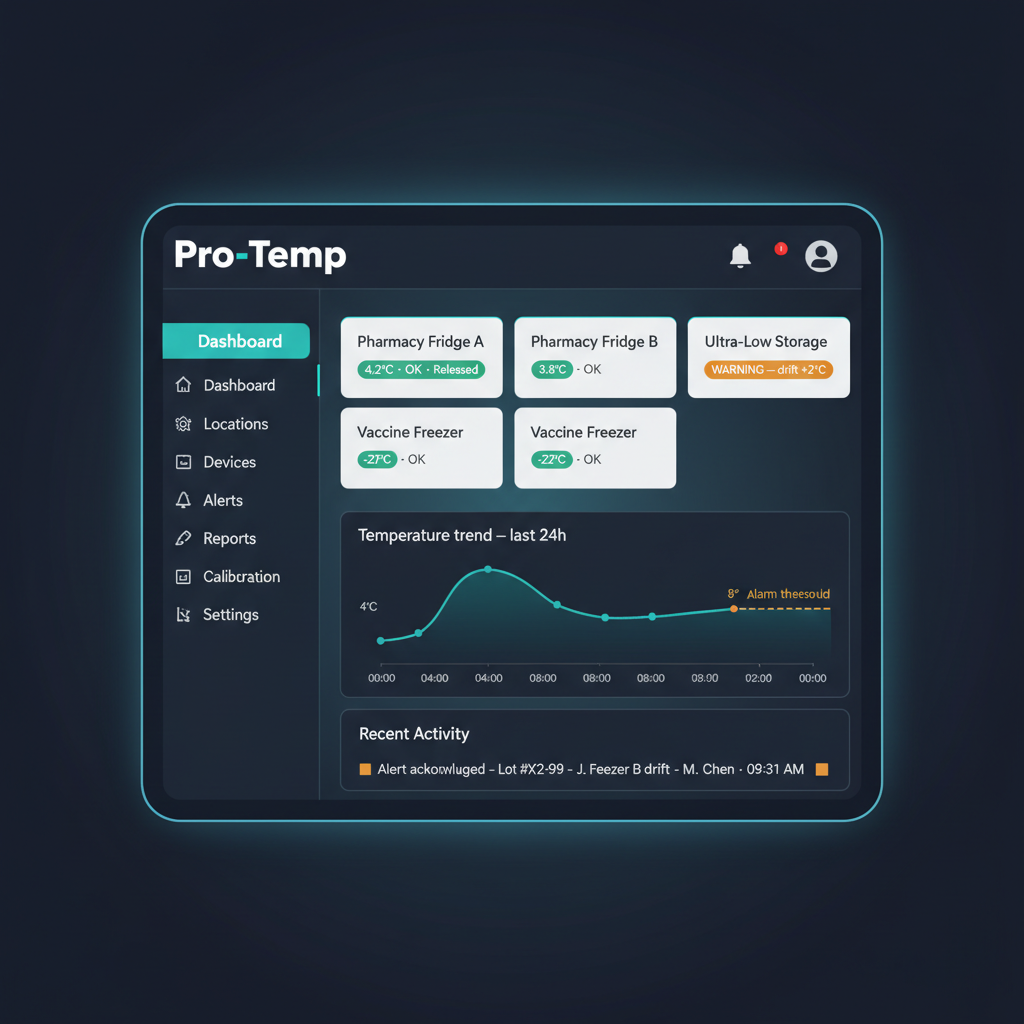
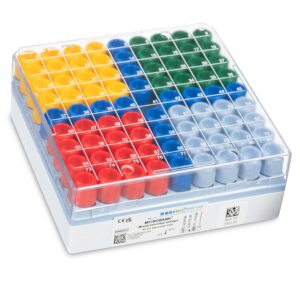
- Can inventory records connect to environmental events from Pro-Temp or storage events from Microbank Marketplace when materials are temperature sensitive?
Why flat pricing matters operationally
Many labs delay cleanup projects because compliance software is priced like enterprise middleware. Flat-tier pricing changes that conversation. Teams can implement workflow control earlier, before growth multiplies inventory disorder across additional users, benches, and freezers.
Implementation should focus on the first 90 days
The best rollout sequence is usually simple: start with incoming inventory, add QC hold-and-release, then pull in equipment and CAPA. Once those workflows are stable, training and audit scheduling become easier because the lab already has a single operational record.
Conclusion
Inventory software ranks when it addresses a real regulated-lab problem: proving control, not just counting stock. For labs that need an audit-ready inventory and QC layer without replacing their LIS, Pro-LIMS Inventory is the product page that should be evaluated first. Labs handling cold storage or long-term strain archives typically pair it with Pro-Temp for environmental monitoring and Microbank Marketplace for cryostorage traceability.