High-complexity molecular testing decisions are usually framed around sensitivity and turnaround time, but workflow fit matters just as much. If a platform shortens amplification time but complicates specimen routing, validation, or result interpretation, the lab may not gain real throughput. That is why the strongest commercial intent sits around operational workflow, not the chemistry alone.
Why high-complexity labs are re-evaluating workflow design
Labs expanding infectious-disease menus need faster pathogen identification, integrated resistance context, and a testing model that scales without adding constant instrument complexity. Isothermal NAAT platforms meet that need when they are packaged as complete workflows rather than standalone assays. That is the search intent behind Pro-Amp.
- Shorter time-to-result versus traditional thermocycling workflows
- Expanded menu flexibility across UTI, wound, respiratory, GI, and women's health testing
- Integrated resistance-gene profiling for faster stewardship decisions
- Simpler operational footprint for distributed reference-lab models
- Clear compatibility with high-complexity CLIA laboratory requirements
Workflow value appears before the final report is signed out
The earliest operational win is usually earlier clinical direction. When pathogen ID and resistance markers arrive together, stewardship teams can act sooner and reflex testing decisions become more targeted. The product page for Pro-Amp is meant to capture that combined diagnostic and workflow value.
Molecular workflows still depend on surrounding systems
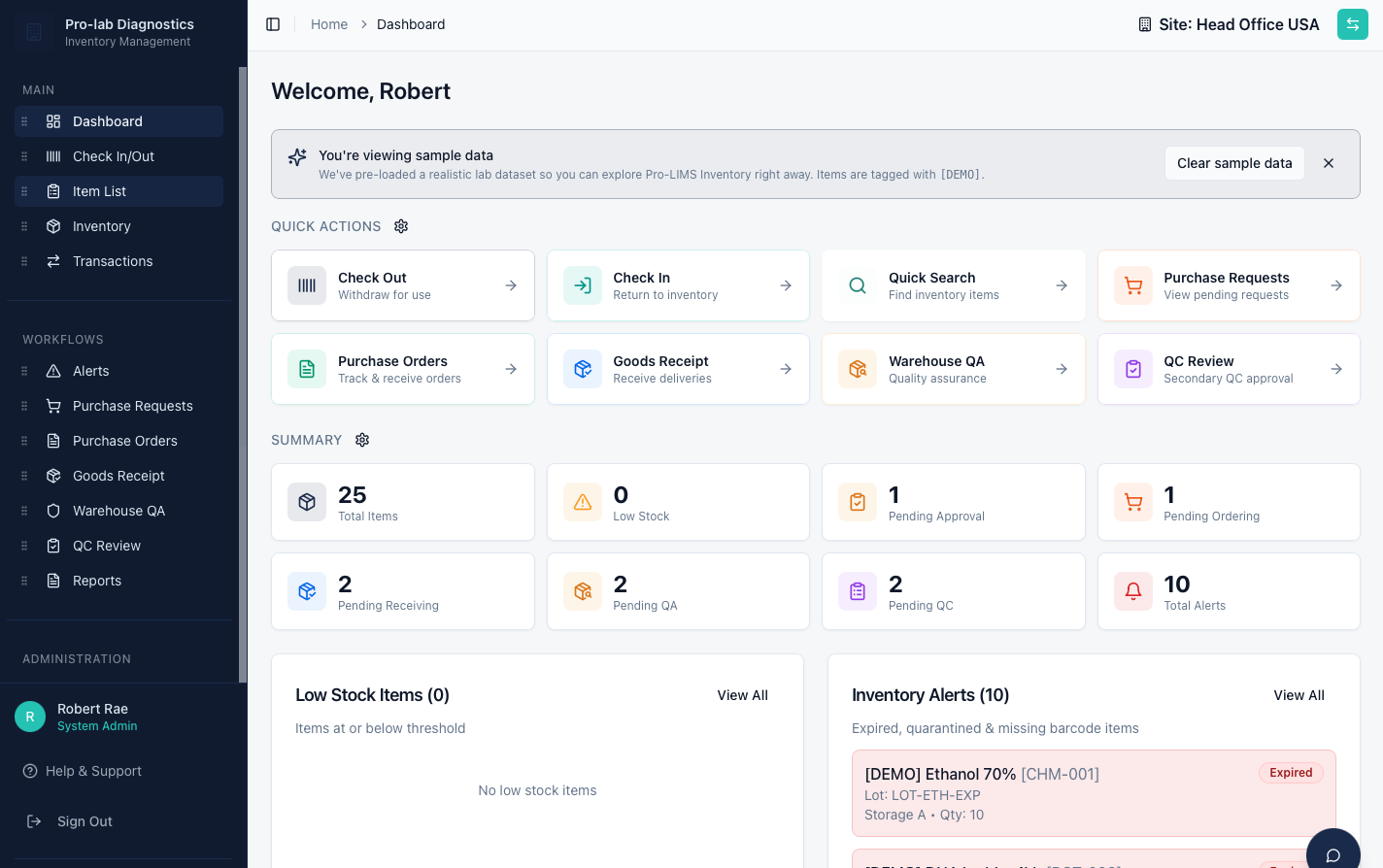
Implementing labs often need more than the assay itself. They may also need Pro-LIMS Inventory for controlled reagents and QC records, Pro-Temp for environmental compliance, and Physicians Office Lab positioning when decentralizing access is part of the growth plan.
Questions a high-complexity lab should ask
- Which specimen types and pathogen groups create the largest turnaround bottlenecks today?
- Does the platform deliver resistance-gene context in the same workflow?
- Can the assay menu be tailored to the site's actual ordering patterns?
- What validation and implementation documentation will the laboratory receive?
- How does the workflow connect with the lab's existing QC and compliance stack?
Search intent is moving from method terms to use-case terms
Decision-makers increasingly search for high-complexity infectious disease workflows, stewardship support, and menu design rather than only searching for "PCR" or "LAMP." Publishing workflow-focused content gives Google clearer context for why Pro-Amp is relevant to those purchase-stage queries.
Conclusion
Isothermal NAAT adoption is not just a technology story. It is a throughput, reporting, and stewardship story. For labs assessing how to expand high-complexity molecular testing without adding unnecessary operational drag, Pro-Amp is the page that should rank. It becomes even more defensible when paired with the compliance and inventory layers around the assay workflow.