Turn-Key Physicians Office Lab

Stop sending revenue to the reference lab.
Run it in your office.

Pro-Lab gives your practice everything it takes to run a compliant, profitable in-office lab — equipment, FDA-cleared assays, Pro-LIMS with integrated billing, collection kits, consumables, and a CLIA-certified backup lab. One vendor. One contract. One call when something needs attention.

Results in minutes, not days. Targeted antibiotics chosen before the script is called in.
ISO 13485 manufacturer
FDA-cleared products
CLIA-certified reference lab backup
Your In-Office Stack
All Included
EQ
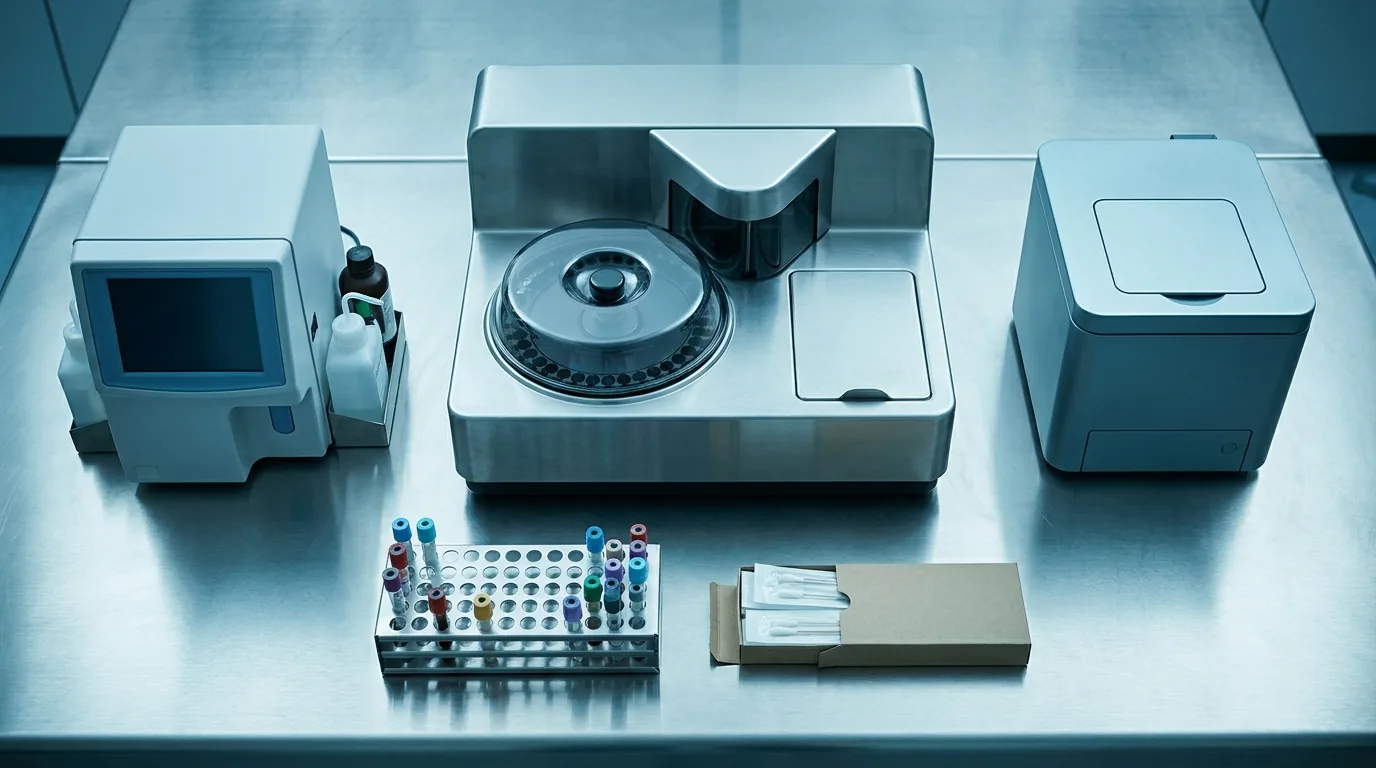
Analyzers & instrumentation
Provisioned
AS
FDA-cleared assays & reagents
Stocked
LB
Pro-LIMS® + integrated billing
Connected
KT
Collection kits & consumables
Replenished
CP
Compliance & PT support
Documented
RX
labtest.bio reference-lab backup
On-call
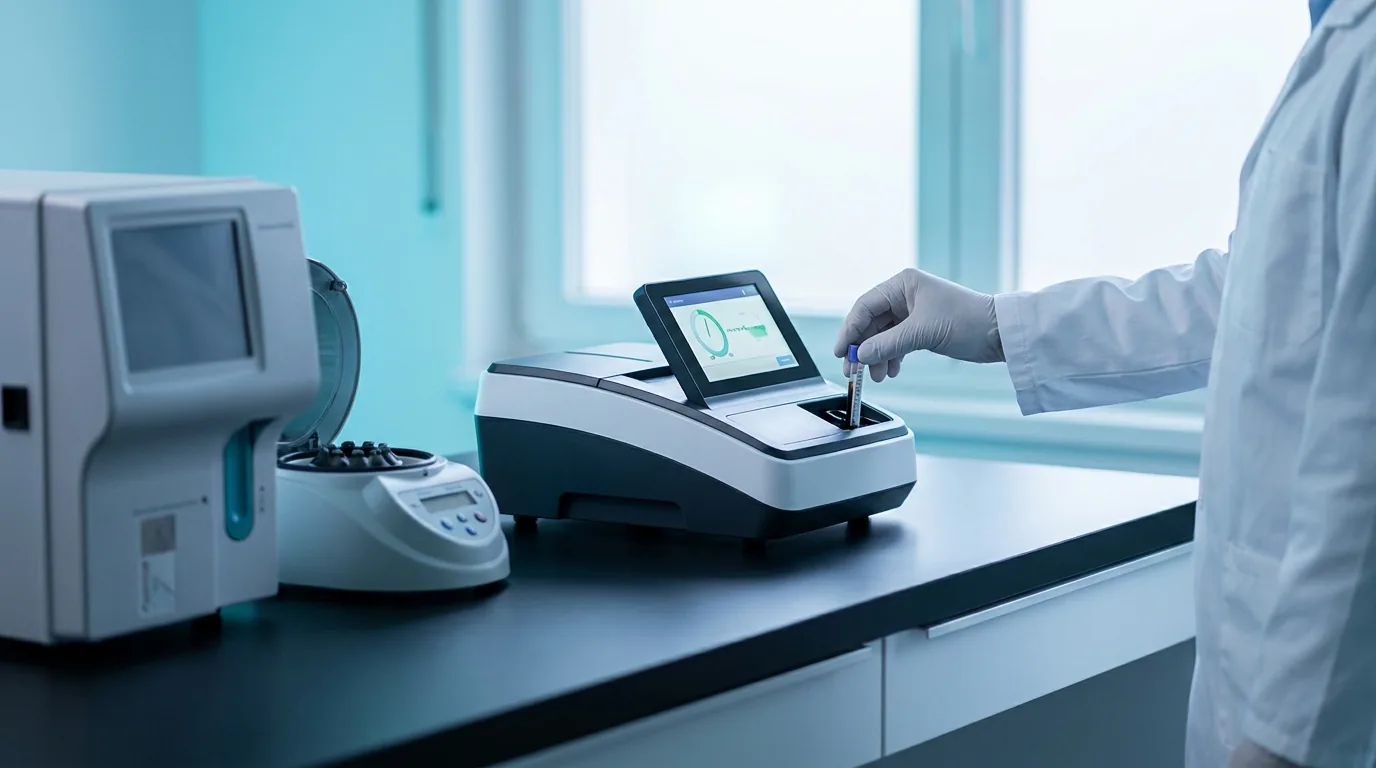
Modern physician office laboratory: chemistry analyzer with a gloved hand loading a sample tube
In your office, on your bench

Same workflow your team already runs — now keeping the revenue.

Same-Visit Diagnostics

Results before the patient leaves the room. Antibiotics chosen before the script is called in.

Reference labs measure turnaround in days. Your in-office bench measures it in minutes. For acute syndromes — UTI, pharyngitis, respiratory, vaginitis, GI — that difference rewrites the visit. The patient leaves with a result. You prescribe with the susceptibility data already in front of you, not a 48-hour callback later.

Reference Lab ~1–3 days

Visit, then wait.

Sample leaves the office on a courier. Patient leaves with no answer. Empiric prescribing fills the gap.

  • Visit complete. Sample drawn or collected. Day 0, 9:00 AM
  • Courier pickup & transport. Sample batched with others. Day 0, afternoon
  • Empiric Rx called in. Best-guess antibiotic; you'll adjust later. Day 0
  • Reference lab runs assay. Resulted into their LIS. Day 1–2
  • Result faxed/HL7'd back. If it arrives. Sometimes it doesn't. Day 2–3
  • Callback to switch antibiotic. Pharmacy refill, patient confusion. Day 2–3
Pro-Lab In-Office ~15–60 minutes

Result during the visit.

Sample to result on your bench. Targeted antibiotic chosen before the prescription is called in.

  • Visit starts. Sample collected at point of care. Visit, 0 min
  • Loaded onto analyzer / panel. One staff action. +2 min
  • Pathogen ID + resistance markers return. Pro-Amp™ isothermal panel. +30–60 min
  • Result reviewed in Pro-LIMS. Susceptibility data on screen. +1 min
  • Targeted Rx called in. Right antibiotic, first time. No callback. Same visit
  • Patient leaves with the answer. — and the right script waiting at the pharmacy. Same visit

Stop empiric prescribing. Choose the right antibiotic the first time.

Rapid molecular panels return pathogen identification and key resistance markers (e.g. mecA, ESBL, vanA/B) inside the visit. For UTI, strep, respiratory, GI, and vaginitis workups, you can have actionable susceptibility information in front of you before the prescription is called in to the pharmacy — not 48 hours later as a callback. Better stewardship. Fewer phone calls. Patients adhere because they leave with the right answer.

0 callbacks
to switch antibiotics

Time-to-result varies by assay, sample type, and instrument. Rapid molecular panels (Pro-Amp™ and equivalents) return pathogen ID and selected genotypic resistance markers within the visit; phenotypic susceptibility for less-common organisms may still require traditional culture timing. Pro-Lab maps your patient population to the highest-yield same-visit menu before recommending instrument placements.

The Problem

Reference labs cost you time, revenue, and control.

Your patients wait. Your staff chase results. Your practice eats the margin a lab is supposed to capture. None of this is news to physicians who've tried to make the reference-lab model work.

~96K
Physician office labs registered with CMS — yet most practices still outsource the bulk of testing.
1–28days
Reported reference-lab turnaround range — standard panels in days, complex assays up to four weeks.
$3.8Blost
Cumulative PAMA-driven CLFS cuts 2018–2020. Reference-lab service quality has tracked the squeeze.

Lost results, missed appointments

Faxes that never arrive. Orders that disappear in someone else's LIS. You rebook the patient or call without a result.

Capex anxiety

Analyzers cost real money. Maintenance contracts cost more. The math works only if utilization is steady — and that's a leap for a small practice.

Compliance maze

Stark, Anti-Kickback, EKRA, in-office ancillary services exception, CLIA waiver vs. compliance. Most physicians don't want to become regulators.

Single point of failure

One analyzer goes down on a Tuesday and the whole in-office model breaks. Without a backup pathway you're sending out anyway.

Vendor sprawl

Instrument vendor, reagent vendor, LIMS vendor, billing service, PT program, training contractor. Six contracts to run one lab.

Billing leakage

Wrong CPT, missed QW modifier, payer-specific edits, denials that age into write-offs. Reimbursement only works if billing is right the first time.

The Shift

Distributed testing isn't coming. It already happened.

COVID forced payers, providers, and CMS to accept testing where the patient is. The infrastructure caught up. The economics flipped. Centralized reference labs are no longer the only place a sample can land.

  • Point-of-care diagnostics: $54.5B in 2025 → projected $114.7B by 2035. ~7.7% CAGR globally; molecular POC growing materially faster.
  • ~180 new CLIA-waived test categorizations granted in 2024. The in-office menu keeps expanding into territory that used to require a reference lab.
  • PAMA cuts averted for 2026. CMS held CLFS rates flat for 2026; rate-change limits (≤15% per year) phase in 2027–2029. The window to stand up reimbursement-stable in-office menus is now.
  • Stark IOAS exception explicitly contemplates clinical lab in the practice. The federal framework for in-office labs was built for this — when structured correctly.
Global Point-of-Care Diagnostics
USD billions · 2025 → 2035 (illustrative trajectory)
54.5
59
69
78
89
101
114.7
'25
'27
'29
'31
'32
'34
'35
CAGR ~7.7% to 2035. North America ≈ 37% of share. Source: SNS Insider / industry consensus.
Our Solution

A lab in a box — minus the box.

Six functions, one partner. We provision, deliver, configure, and keep all of it running.

Equipment

We supply the analyzers and instrumentation. You don't source equipment from three vendors and reconcile their service contracts.

Assays

FDA-cleared assays engineered to be faster and easier to run than competitive equivalents — with reagents and controls included.

LIMS & Billing

Pro-LIMS® is purpose-built for clinical labs. The integrated billing module handles CPT, modifier QW, payer edits, and denials with AI assistance.

Kits & Consumables

Swabs, transport media, gloves, reagents, controls — everything from sample collection to result, replenished on schedule.

Compliance

ISO 13485 manufacturing. FDA-cleared products. CMS-aware billing. Documentation supporting Stark in-office ancillary services positioning.

Support

One number. Real humans. Instrument issue, billing question, PT event, audit prep — same line, same team, same day.

Everything you need. Nothing you don't.
Why Pro-Lab

We've been doing diagnostics for decades. This is what shows up on day one.

Pro-Lab Diagnostics USA isn't a startup distributor. We design, manufacture, and certify the products you'll be running.

A primary-care physician reviews lab results with a patient in a calm, modern exam room

ISO 13485:2016 manufacturer

Medical-device quality management system audited annually. Not a reseller bolted onto a brand.

FDA-cleared product portfolio

Prolex®, Microbank®, Pro-Amp™ panels, Amniotest®, Transvelope® and more — registered IVDs.

CLIA-certified reference lab

labtest.bio is our high-complexity CLIA lab. Use it as overflow, send-out, or backup when an instrument needs service.

CMS / Medicare-aware billing

The Pro-LIMS billing module is built around the CLFS, CPT, and QW modifier logic that POL claims actually need.

Stark / AKS documentation support

We supply documentation supporting Stark in-office ancillary services exception positioning. Your counsel renders the legal opinion; we hand them the file.

Decades in IVD

Manufacturing, distribution, validation, and field support across thousands of clinical laboratories.

The Economics

You will make money. Here's the math.

Illustrative, not a guarantee. Assumes a small primary-care practice running a CLIA-waived menu — common labs ordered every visit. Real numbers depend on payer mix, test menu, and volume.

Assumption Value Notes
Tests run per month 400 ~20 patients/day × 1 in-office test × 20 working days
Avg. reimbursement per CLIA-waived test $15 – $35 Range cited by industry sources for common waived tests
Monthly gross at $20 average $8,000 Revenue captured in the practice instead of routed out
Reagent + consumable cost (illustrative) ~$2,400 Varies materially by test; bundled in your Pro-Lab program
Net contribution / month (illustrative) ~$5,600 Before Pro-Lab program fee. ~$67K/year captured.

Figures are illustrative for planning conversations only. Pro-Lab does not guarantee specific reimbursement, volumes, or margins. CMS Clinical Lab Fee Schedule rates are published annually; commercial-payer rates vary. We'll model your specific test menu and payer mix during the consultation.

AI Billing Performance

Fewer denials. More errors caught. More appeals paid.

Pro-LIMS doesn't just submit claims — it scrubs them with payer-specific rules, flags errors before they ever reach the carrier, and works the appeals queue when something does come back. Here's what that looks like.

−81%
Reduction in claim denials at 12 months vs. baseline
94%
Errors caught and corrected before submission
68%
Appeals overturned and paid (vs. ~40% industry avg.)
Claim denial rate — 12-month rollout
Practice-level monthly denial rate. Illustrative.
Without AI With Pro-LIMS AI
16% 12% 8% 4% 0% M1 M3 M5 M7 M9 M11 13.1% 2.5%
Industry baseline denial rates run 10–15% on commercial mix. Pro-LIMS AI scrubbing typically converges to a single-digit denial rate within two quarters as payer-specific rules calibrate to your practice's claim history.
Errors caught at submission
By category, illustrative POL mix.
94%
Caught pre-submit
Modifier errors (e.g. missing QW) 28%
Eligibility / coverage 22%
CPT ↔ Dx mismatch 18%
Patient data / demographic 14%
Frequency / duplicate 10%
Other (NPI, signature, etc.) 8%
Modifier and eligibility errors alone account for half of all rejected POL claims industry-wide. Pro-LIMS catches them before the claim is filed — not 30 days later when the EOB lands.

Figures shown are illustrative for planning conversations. Actual denial rates, error breakdowns, and appeal recovery vary by payer mix, specialty, claim volume, and practice billing history. Pro-Lab does not guarantee specific outcomes.

What's Included

Everything in the box.

If it touches the lab, it's part of the program.

Analyzers & instrumentationSized to your practice, installed, calibrated.
Reagents & controlsFDA-cleared, lot-traceable, replenished on schedule.
Collection kitsSwabs, transport media, sample tubes — sized to test menu.
Pro-LIMS® accessCloud-based, role-based, audit-ready.
Integrated billing moduleCPT, QW modifier, payer edits, denial workflow.
Proficiency testing supportEnrollment, sample handling, attestation.
Staff trainingInitial competency + recurring assessments documented.
CLIA application supportCOW, COC, or PPM — we help you file the right one.
Compliance documentationMaterials supporting Stark IOAS positioning for your counsel.
labtest.bio reference-lab backupCLIA-certified overflow when you need a send-out.
Ongoing supportOne contact, real humans, business-hours response.
ConsumablesGloves, pipettes, sharps containers — single PO.
FAQ

The questions every physician asks first.

Honest answers — including the parts your counsel will want to verify themselves.

Do I need a CLIA Certificate of Waiver or a Certificate of Compliance?
Most POLs start with a Certificate of Waiver (~$150 / 2 years, no routine inspection) and a CLIA-waived menu. Adding moderate-complexity testing requires a Certificate of Compliance (or Accreditation), with a designated lab director, technical consultant, biennial inspection, proficiency testing, and survey fees scaled to test volume. We support both paths — and tell you honestly which one your practice needs.
Is in-office testing compliant with Stark Law and the Anti-Kickback Statute?
The Stark Law In-Office Ancillary Services exception specifically contemplates clinical lab services performed in a physician practice when its requirements are met (group-practice structure, supervision, location, billing). The Anti-Kickback Statute and EKRA apply independently. We provide documentation supporting your counsel's compliance review. We don't render legal opinions on individual practice structures — your counsel does, and we give them the file they need.
Can patients really get results before they leave the office?
Yes for most acute syndromes. Rapid molecular panels — Pro-Amp™ isothermal panels and equivalents — return pathogen ID plus key resistance markers in 30–60 minutes, comfortably inside a typical visit. Common in-office menus for UTI, pharyngitis, respiratory, GI, and vaginitis are designed to be sample-to-result during the appointment so the patient leaves with the answer and you prescribe the right antibiotic before the script is called in to the pharmacy. Time-to-result varies by assay, sample type, and instrument; phenotypic susceptibility for less-common organisms may still require traditional culture timing — we map your patient population to the highest-yield same-visit menu before recommending instrument placements.
What happens if my analyzer goes down?
You don't stop testing. Pro-Lab includes labtest.bio — our CLIA-certified reference lab — as a documented overflow and send-out pathway. While the instrument is being serviced, samples route to labtest.bio, results come back through Pro-LIMS, and the patient experience is uninterrupted.
How are tests reimbursed in 2026?
Most in-office tests bill under the Medicare Clinical Laboratory Fee Schedule (CLFS). CLIA-waived tests use modifier QW. CMS averted PAMA-driven CLFS reductions for 2026, with the moratorium extended through Dec 31, 2026 — so 2026 rates are stable. Beginning in 2027 through 2029, payment for any test cannot be reduced more than 15% per year. Commercial payer rates vary; the Pro-LIMS billing module handles claim formatting, modifier logic, and denials.
What does it cost to start?
Programs are scoped to your practice size, specialty, and target test menu. We offer bundled, subscription, and revenue-share structures so capital outlay is predictable. The right starting point is a 20-minute conversation — once we understand your patient volume and payer mix, we send a written proposal.
How long does it take to stand up a POL?
From signed contract to first reimbursable test: typically 6–12 weeks for a CLIA-waived menu, longer for moderate-complexity. CLIA application processing, payer credentialing for the lab's billing identifier, and staff competency training are usually the gating items — not equipment.
What tests can a CLIA-waived POL actually run?
The waived menu has expanded materially — CMS issued ~180 new CLIA-waived test categorizations in 2024 alone. Common categories: glucose and A1c on cleared instruments, urine dip and pregnancy, rapid strep and group A, flu/COVID antigen, lipid panels on cleared platforms, fecal occult blood. We map your specialty and patient population to the highest-yield waived menu before recommending instrument placements.
What about proficiency testing and quality control?
We enroll your practice in the appropriate PT program, schedule and ship the samples, walk your staff through running them, and document attestation. QC is built into Pro-LIMS — controls are tracked per lot and flagged automatically when out of range.
Get Started

Ready to start your in-office lab?

Tell us about your practice — number of physicians, specialty, current testing pattern. We'll come back with a written, specialty-specific proposal within 3 business days.
20-minute consultation, no obligation
Specialty-specific test menu and ROI model
Compliance file delivered to your counsel
Direct line to a Pro-Lab consultant after the call
We'll email you a 6-digit code to verify, then schedule a 15-min call. Your info is used only to respond to your inquiry. See our Privacy Policy.